
Welcome to our farm, Addington Downs.
Producing delicious lamb & beautiful yarns. Where we are striving to become a micro sheep dairy…
Trying to produce enough sheep & goat’s milk to make cheese might take a little while… So while we work hard on setting up the milking side of things we’ve started producing beautiful sheep & alpaca yarn as well as delicious young lamb for your table. Follow our farming journey and be inspired to connect with your farmer, who ever they are.
Meet our flerd…
-
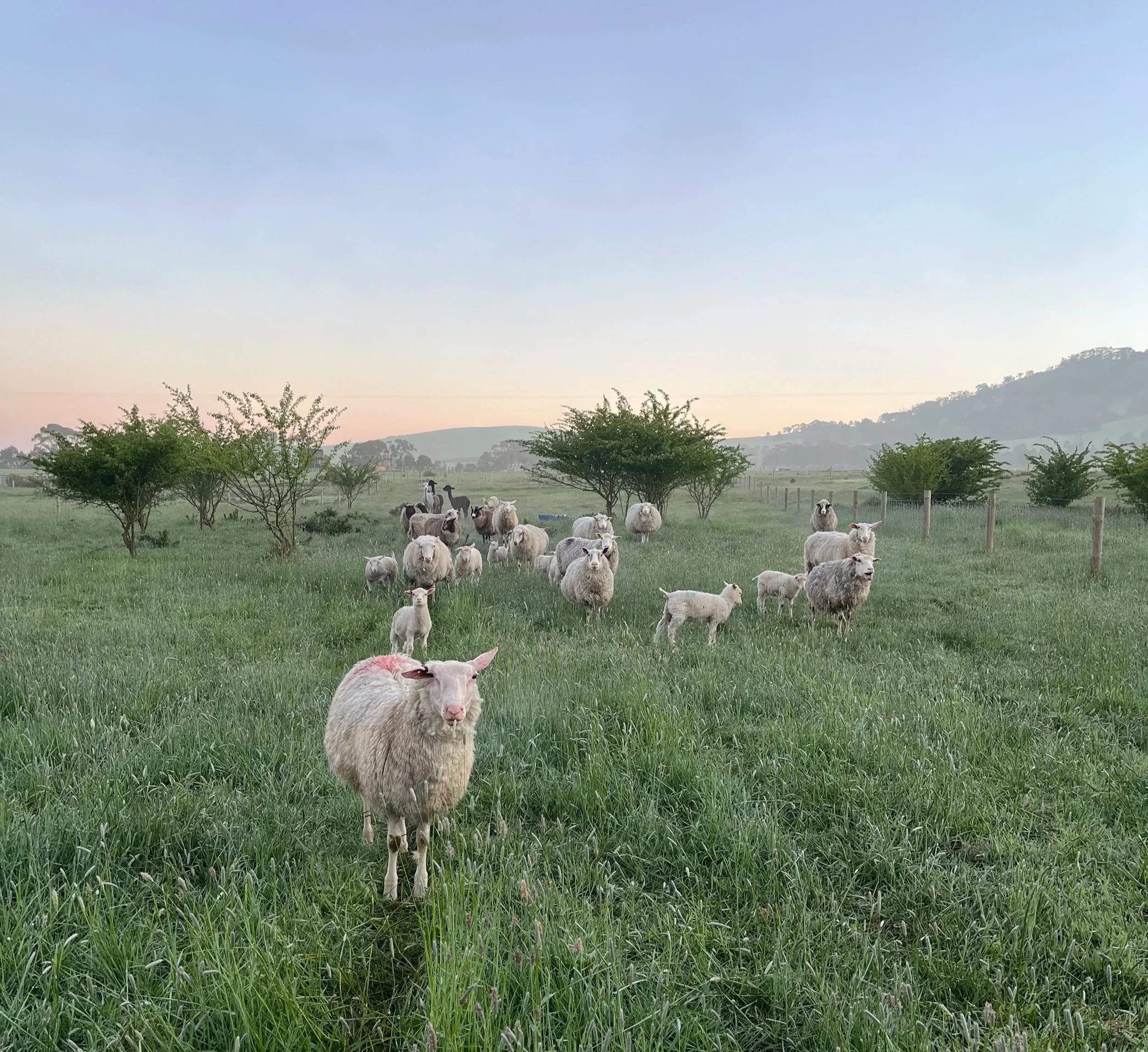
Milking sheep
MEAT, MILK & FIBRE PRODUCERS
We run two main rare breeds of sheep, predominantly pure East Friesian ewes as well as some coloured Finnsheep. We join our ewes with our pure Finn rams twice a year, running two flocks to spread the lambing across the seasons. This produces a beautiful cross breed that we’re proud of, improving the fleece of the lambs & producing exceptional meat.
We aim to produce meat, milk & fibre on our farm. To do this requires a lot of highly nutritious pasture & a balanced approach to feeding for dairy. This is no easy task. It’s a lot to ask of our ewes. We put a lot of time & care into crafting their diet, made up of our own fresh pasture, legume hay that we source locally & whole grains & seeds that we mix ourselves. The lambs are not offered a ration like the ewes. When they’re not drinking their mothers milk they eat pasture & hay. They may get a nibble from the ewes trough, so I will not claim they are 100% grass fed, but we do not actively feed the lambs grain.
The lambs or kids are weaned between 8-12 weeks of age depending on their weight & condition. We aim to send the lambs for slaughter at 4-6 months of age, again depending on their condition. This is much more in line with the European way of eating young lamb, to then be able to milk the ewe or doe for the remainder of the season. This sized lamb is perfect for the spit, hence the cultural & traditional uses at times of very special celebrations or religious ceremonies. Whilst it’s uncommon for most of us to want to throw a lamb on a spit, wanting smaller, more manageable cuts is what I’ve been hearing. I’ve found that this size suits smaller households & the lighter, more delicately flavoured meat suits many more palates. It’s for this reason I’m pursuing this carefully considered way of rearing the livestock.
Producing meat & dairy along side one another is very complex & we don’t pretend to know everything. We just think there’s a better way than the status quo. We offer all our stock free choice minerals as well as blocks at different times of the year. We strive every day to improve our land to support this vision of healthy & happy livestock. Regenerating the pasture is our passion.
-
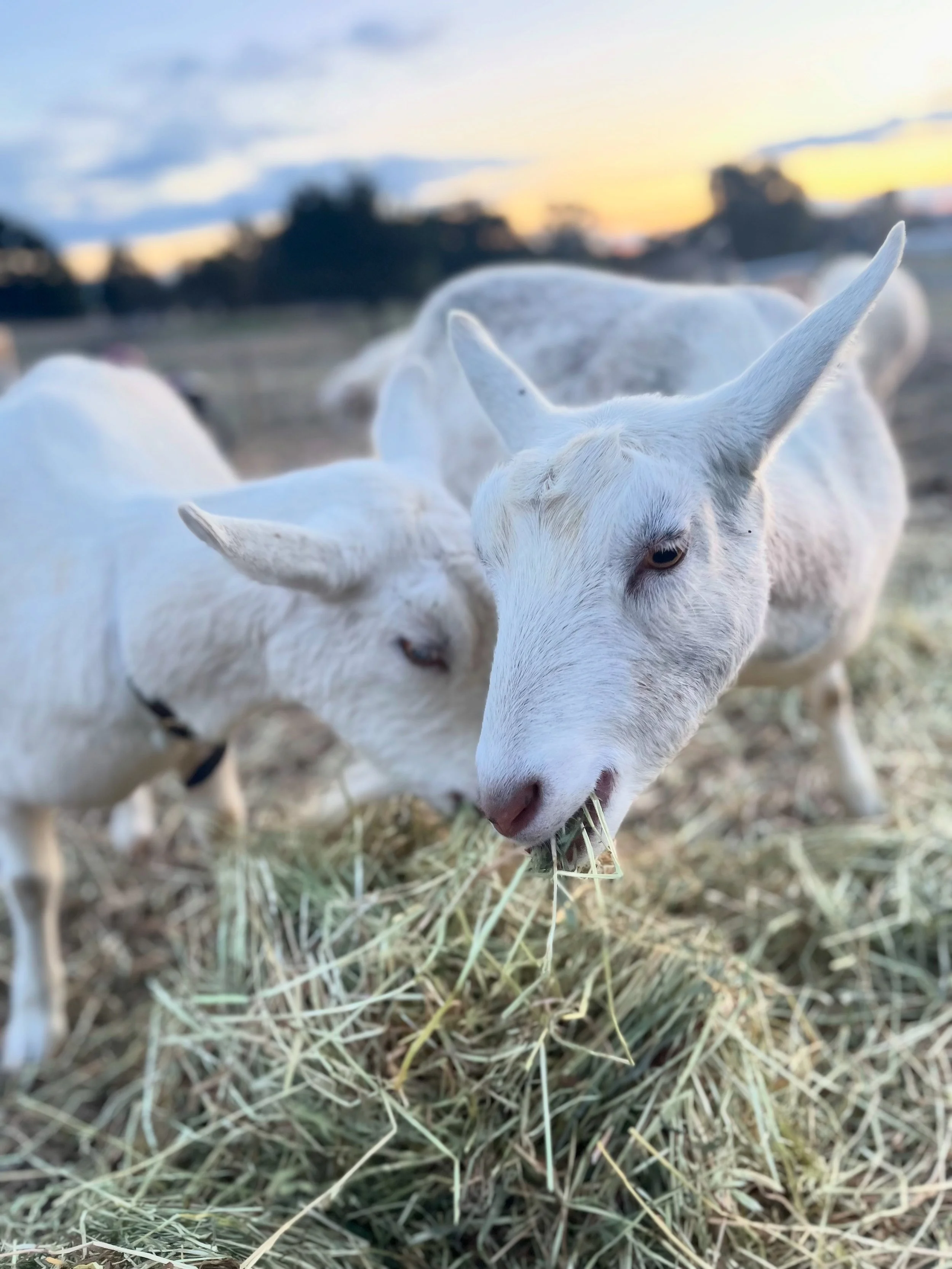
Dairy goats
ADDINGTON DOWNS THERAPISTS
My love for goats & the love of milking began with Blanca & her daughter Blanchette. They were part of a small herd of goats at a farm around the corner. On the other side of Mount Bolton there was a farmer who was living my dream. I was encouraged by locals to approach her & ask her to teach me how to milk. So I did, & what was to follow would change my path forever.
Since bringing these girls home my love for goats & all that comes with milking has grown so much. A course at the Castlemaine cheese school led to many more milky connections. It was there that I learnt the Obsalim method. The life’s work of a French vet named Bruno Giboudeau, his system was designed to help farmers & vets optimise the health, productivity & quality of all ruminants. Representing a holistic approach to managing animal health & nutrition, by observing your ruminants & learning what the behaviours or presentations mean. You can then make adjustments to their diet for optimal health & efficiency. It’s a natural way to be more connected to your livestock.
It was here that I met Olivia from Wedgetail Farmstead. She runs a herd of dairy goats in Wattle Flat, not too far away from us. She is a farmer & a cheese maker, I’m unsure if she’s 100% sane! She has been a great help with getting to know all the ins & outs of keeping dairy goats. I’m lucky to have great support in new friends as farming definitely demands strong relationships. For all your goats’ cheese needs, head to her page & see where you can buy her beautiful cheese.
-
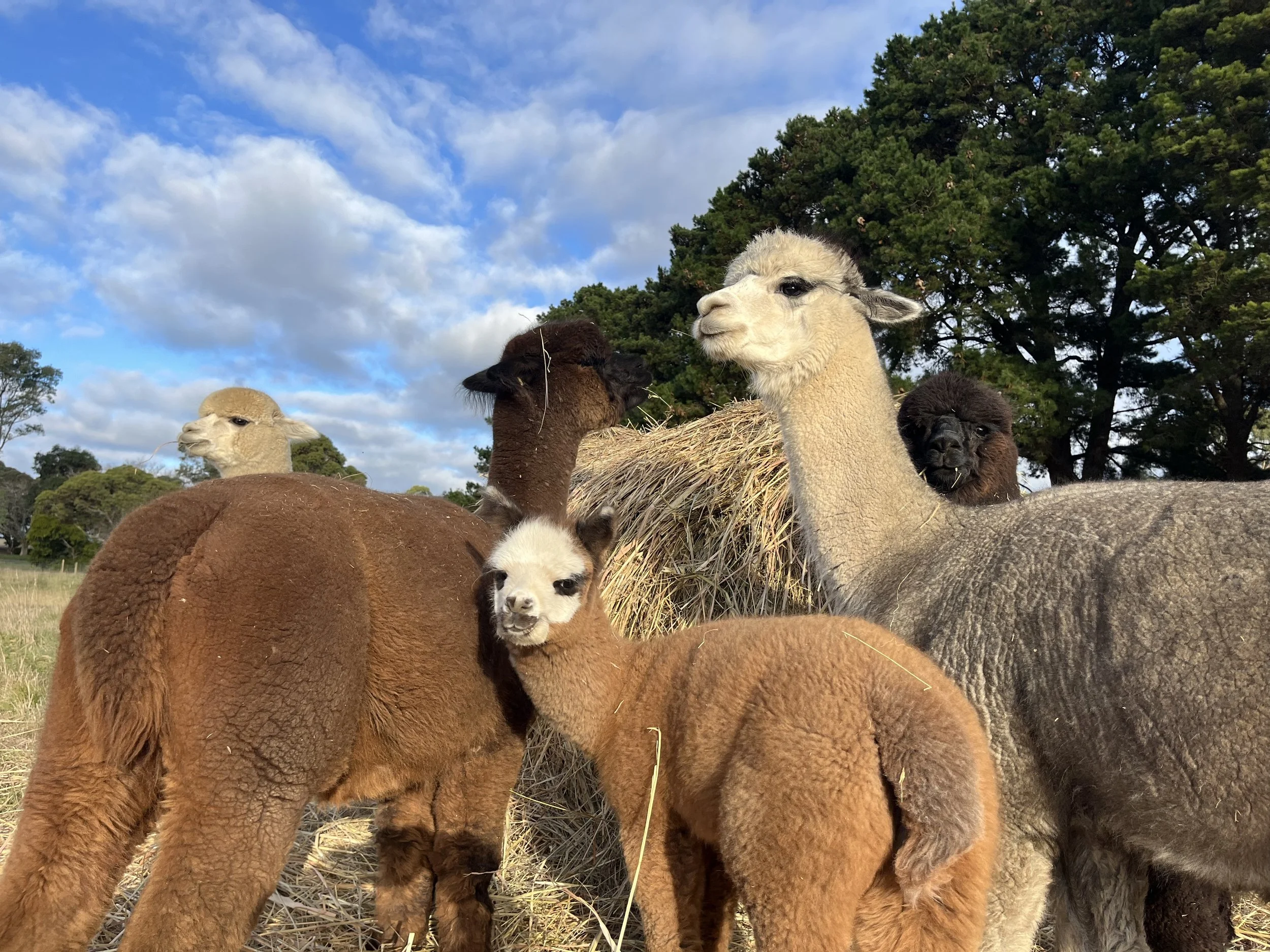
Huacaya alpacas
FARM GUARDS & FIBRE PRODUCERS
All it took was one skein of 100% alpaca yarn bought from a small sock shop in Clunes, Victoria. It was a weekend getaway to an off-grid sheep farm where we were sussing out the region for a potential tree change. Alex had already started knitting & was getting deeper into the world of natural fibres.
I was becoming more & more disillusioned with the restaurant industry & the quality of produce on offer. It led us to buying our property & starting the long journey to producing as much of our own food as possible. Producing fibre has become an obsession, one that we’ve be generously guided through by the alpaca breeder we now call a friend.
We approach alpaca husbandry using the CAMELIDynamics method which aims to be kind, efficient, safe & science based. It is easily explainable by comparing it to low-stress cattle handling. We started learning at a course on Rita’s farm in late 2022. It took a year of trips to Harcourt before we felt like we had enough knowledge to bring home our girls.
The alpacas play an important role in the well being of the farm, protecting the lambs by guarding them. This behaviour is not instinctual to every alpaca but our girls were chosen for their guarding abilities as well as their exquisite fleece. We’ve had one cria born on our farm. We called her Inca. She is growing into a beautiful alpaca with exceptional fleece & the perfect temperament. With two sets of mothers & daughters, as well as Daniella, our creamy fawn lady; there’s still room for a couple more girls.
For anyone interested in learning more about alpacas or who would like to purchase them, we highly recommend Rita from Campo Verde Alpacas & Llamas.
-
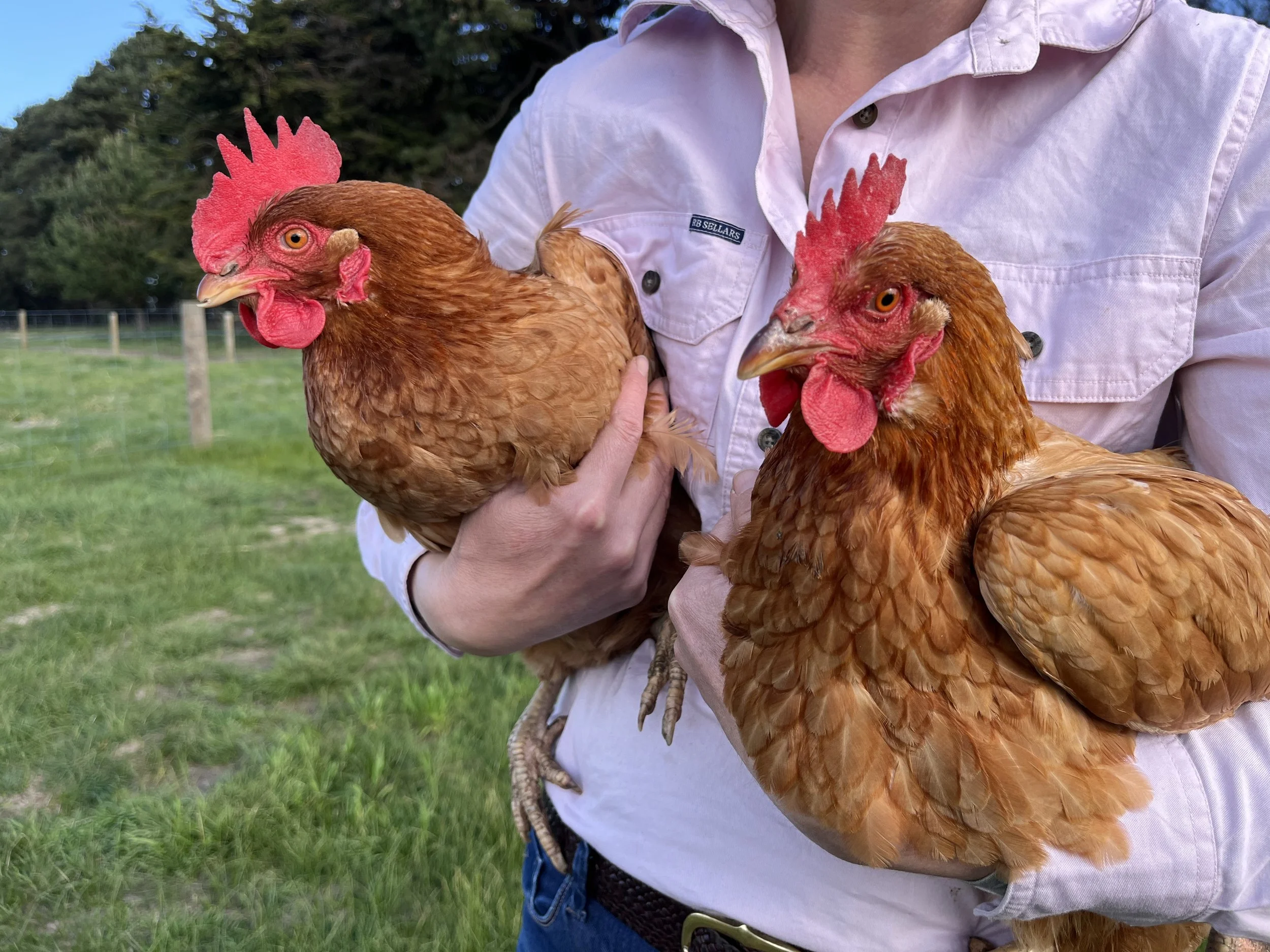
Chooks
HEAD OF PASTURE RENOVATIONS
No one could predict the impact that half a dozen hens would have on our land. We house them in a mobile coop that we move around our farm. We move their house every day so they are always on fresh pasture.
We feed them a coarse, whole grain layer mix which has wheat, sorghum, barley, triticale, pearl millet, sunflower seeds, mung beans and corn. What they don’t eat usually germinates after a rain event & we get small patches of wheat & barley coming up where the chickens have been.
Their feed comes from Country Heritage Feeds, an organic feed company located in Queensland, who believe in chemical free, GMO free farming. How lucky we are! They specifically formulate this range without any soy products or animal meals. It’s not that we don’t think the chickens shouldn’t eat meat; in fact we feed them the offal from our red-meat animals. It’s that we don’t think the waste streams from animal and fish processing is regulated enough to know what the ‘fish meal’ or ‘meat meal’ is actually made up of or how it was farmed. We also think that fresh is best so we feed out our own offal & keep the grains whole to avoid any heat treated feed. We endeavour to retain the offal from our lambs that get processed at the abattoir & stick to the system we have here. We feed it out to our chickens so that their eggs are rich in vitamins & minerals.
Our girls are considered “old” in the commercial laying world & come from Sunnybank farm, which is just down the road in Burrumbeet. There they re-home their girls after 18 months of age when their eggs get too big to sell commercially. The usual practice for birds who reach this age is euthanasia. We’re proud of our friends for pursuing a different path for their “spent” hens & are happy beneficiaries.
-
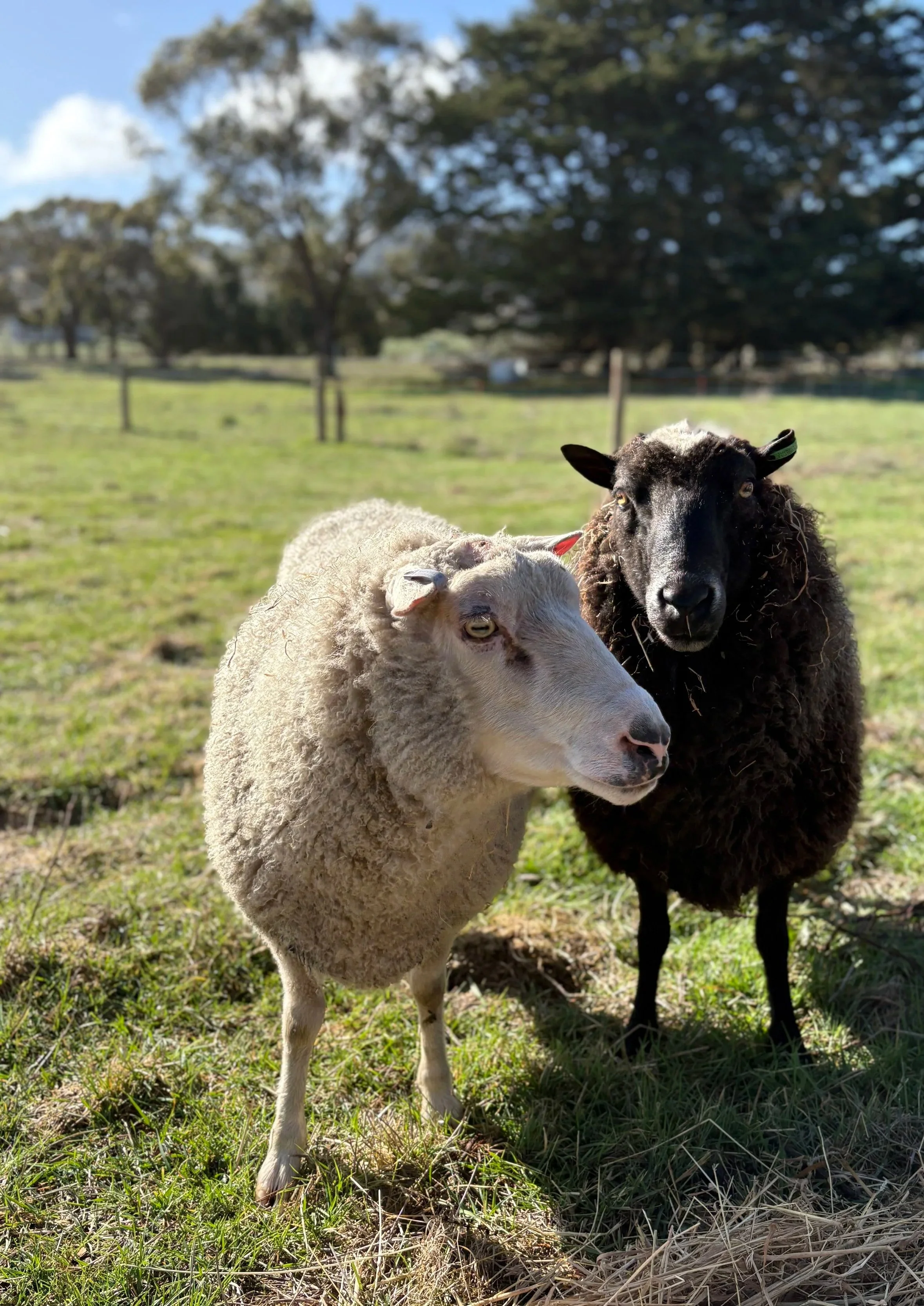
Finn rams
BOYS BEING BOYS
What can we say? To get lamb, you need a ram. It just so happens that we have one in each colour. Bruno is our white boy, tasked with a bigger job at Autumn joining. Graham, our pure coloured Finn is on the job at spring joining, Finns are a unique breed of sheep that can be joined year round. Ewes cycle when rams are present which gives us the flexibility to offer lamb boxes each quarter. While both rams have simple tasks, they have their strengths. Bruno is relied upon to ensure a supply of lambs coming into the spring, essential for a strong milking season.
Graham is relied upon for us to produce pure coloured Finn lambs. Coloured raw fleece will be available to purchase after shearing in Spring, as well as spun yarn & some small hand made garments. We will also offer lamb & sheep skins when possible as a way to utilise an otherwise wasted product. Pushing for a closed loop farm with zero waste might seem impossible but it doesn’t stop us from trying.
-
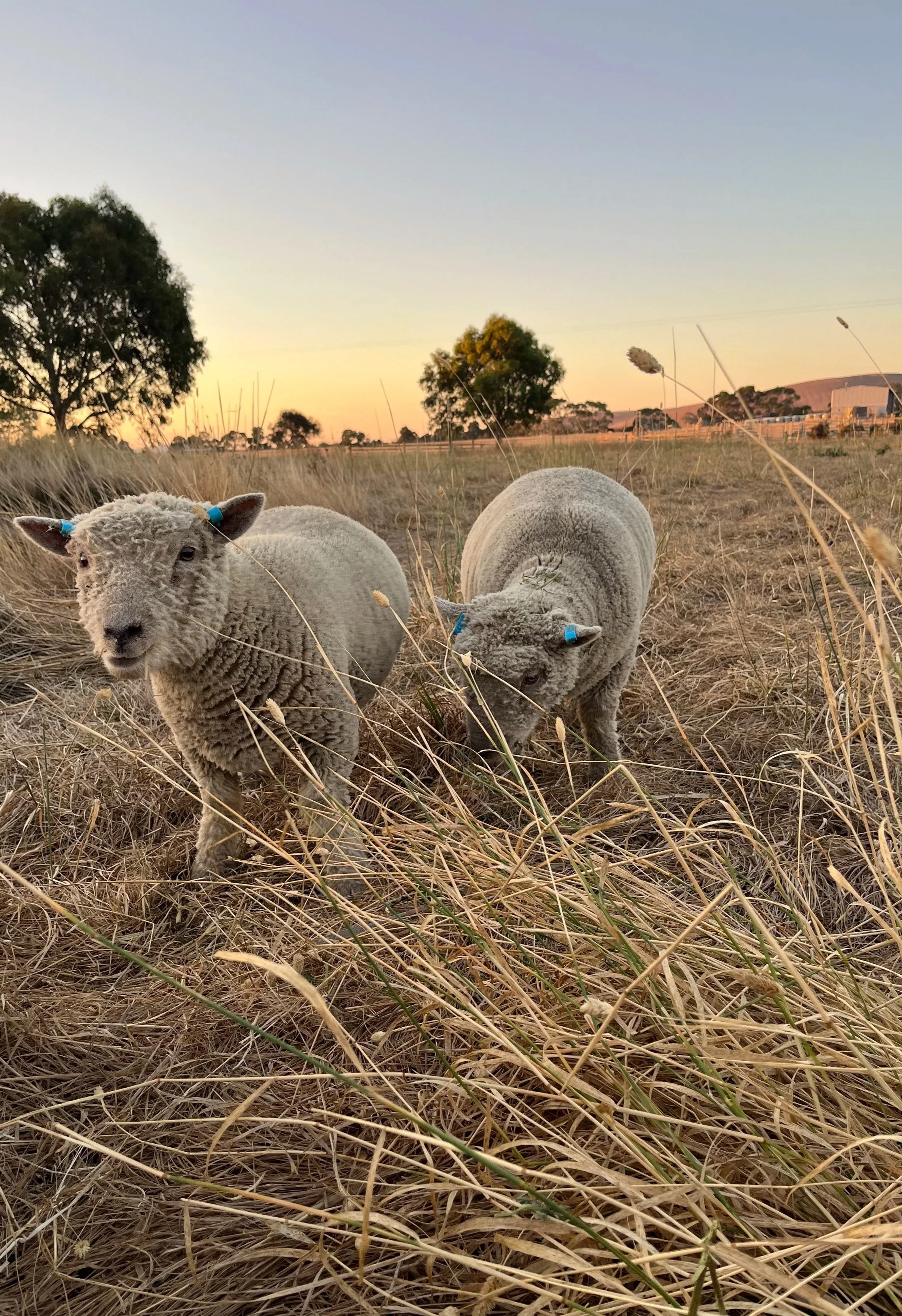
Babydoll boys
FOUNDERS OF THE ADDINGTON DOWNS WELLBEING PROGRAM
When we moved to Addington we met a lovely couple up the road who run beautiful Red Angus cattle & breed Babydoll sheep. Whilst we’d heard about this extremely cute breed, we’d never seen them before. It took less than five minutes & one squishy face to come up for a pat & we had to make up an excuse to buy them. We found out that their fairly course fleece was used for making socks, which fitted perfectly with the whole fibre production idea. You can’t believe the impact these cute things had on us, starting us on our “sheepy” journey. Guess what? There’s no way we can make socks from their fleece! But they have an important role keeping our rams company, thus enhancing the wellbeing of the rams as they can keep a sort of hierarchy amongst themselves. We call them our “soul” sheep.
If you need Babydoll sheep in your life, speak to Helen at Addington-Lee Farm
-
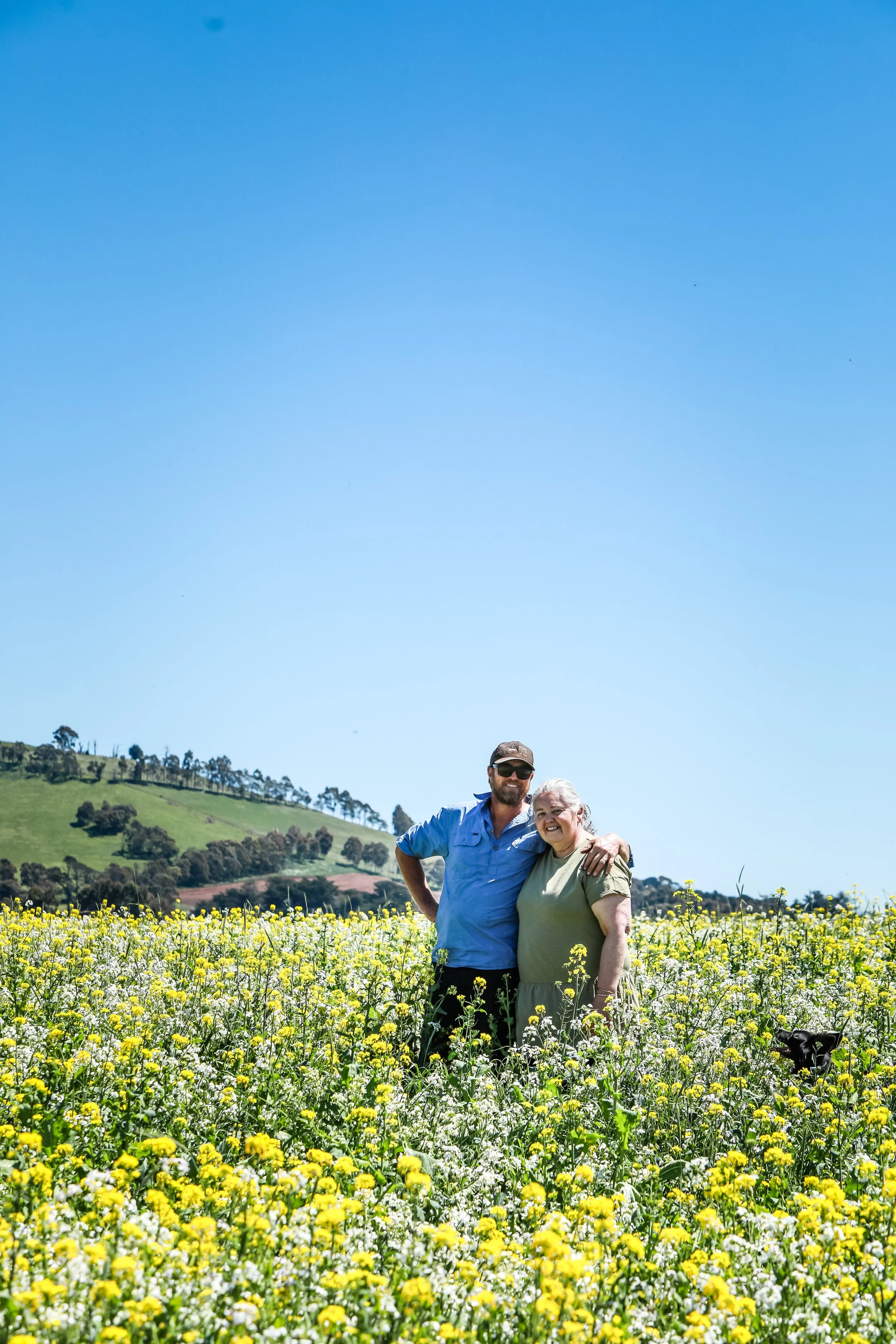
Our mentors
JONO & NATS - BROOKLANDS FREE RANGE FARMS
As they say, it takes a village. In this case our village is split between our community close to home in Learmonth & Mount Bolton & our extended farming family in Blampied. I work for the best Berkshire pork & British White beef producers in the world, where regenerative farming practices have been used for over a decade.
This is where I started my farming journey. This lovely couple embraced my enthusiasm & quenched my thirst for learning about the way they do things differently. You will be hard pressed to find a couple that’s more hard working & dedicated than these two. With the passion for soil health instilled in me by Nats & the love of pasture passed on by Jono, I will be forever grateful for the opportunity.